
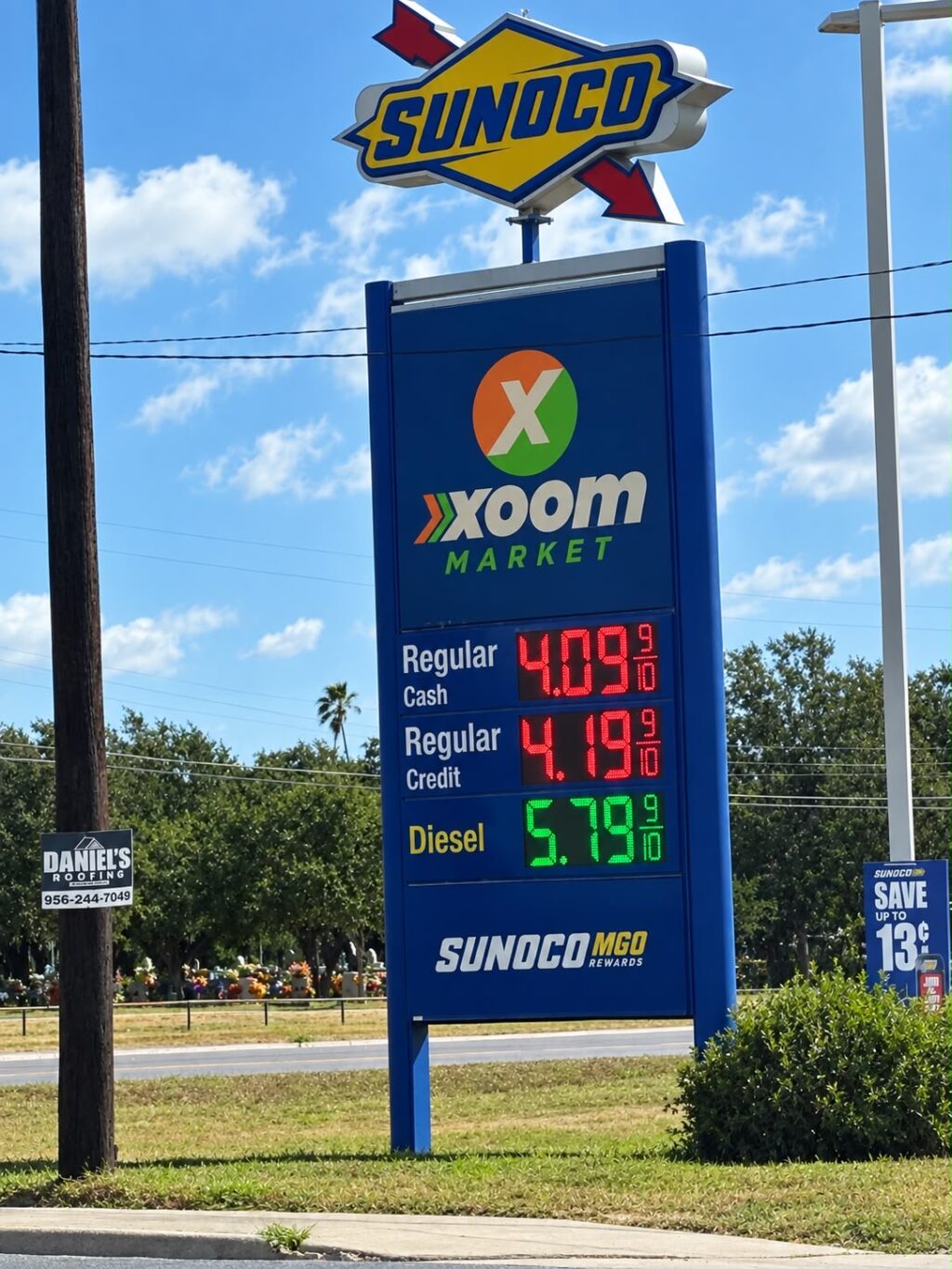
According to the U.S. Department of Energy, gasoline prices have risen to a record breaking $4.09 this month, causing many to feel the financial burden of the conflict in the Middle East.
The sudden rise of gas prices is largely driven by supply and demand. With Iran being a major oil producer, conflict has disrupted production and transportation reducing the amount available on global markets.
UTRGV Political Science Professor Mark Kaswan said the conflict has also affected oil shipments through the Strait of Hormuz, a major route for global energy supplies.
“Oil is generally traded on global markets,” Kaswan said. “If there’s a cutback and a substantial reduction in supply, then that’s inevitably going to have an impact on prices.”
The United States is one of the world’s largest oil producers, but Kaswan said the country still participates in the global oil market.
He added the U.S. government has several options to help reduce the gas prices on consumers.
One option is releasing oil from the Strategic Petroleum Reserve. Another option is temporarily suspending federal gasoline taxes, although Kaswan said that would have a limited effect on prices and could reduce funding used for roads and public transportation
“Google says, 18.4 cents per gallon,” Kaswan said when referring to the taxes. “Diesel is 24.4 cents.”
Kaswan also brought up longer-term energy policies, including expanding electric vehicles and alternative energy sources.
“Development of clean energy sources takes years. It’s not a quick fix,” Kaswan said.
He said increasing local energy production could help reduce the effect disruptions in the global energy markets have on the U.S.
Kaswan said uncertainty surrounding the conflict can also affect decisions made by oil companies because energy projects can take years to develop.
“The more we can localize energy production, the more that we can shield ourselves from these kinds of events,” Kaswan said.
UTRGV Economics Professor Gautam Hazarika said Iranian blockades in the Strait of Hormuz impact global markets as well.
“China is the main buyer of Iranian oil,” Hazarika said. “So once, because of the blockage in the Strait of Hormuz, China is unable to buy Iranian oil. So China then goes out there and buys oil from other countries, buys oil in the world markets.”
This shift drives up demand and global crude oil prices. This rise in cost increases the price of transporting goods in the U.S. via truck and trains and increases the prices of goods necessities for consumers such as food and clothing.
Hazarika said students at UTRGV will feel the financial pressure at the pump and through general inflation.
Special Education Grad Student Arturo Marin said his daily 12-minute commute to campus has significantly affected his student budget.
“Sometimes I wanna go like, oh let’s go eat food or something, and then I realize like ‘what if my friends needs gas’, we’ll just go for the local,” Marin said.
Marin said although he lives far from campus he has considered biking to class if gas prices keep increasing.
He added this change has led him to be more interested in voting during the midterm elections.
“Personally, I’ve never voted,” Marin said “if it were up to me, I hope [whoever] is running needs to change these gas prices down to [what] it was back when I was little”
This is Emilio Suarez for Vaquero Radio